

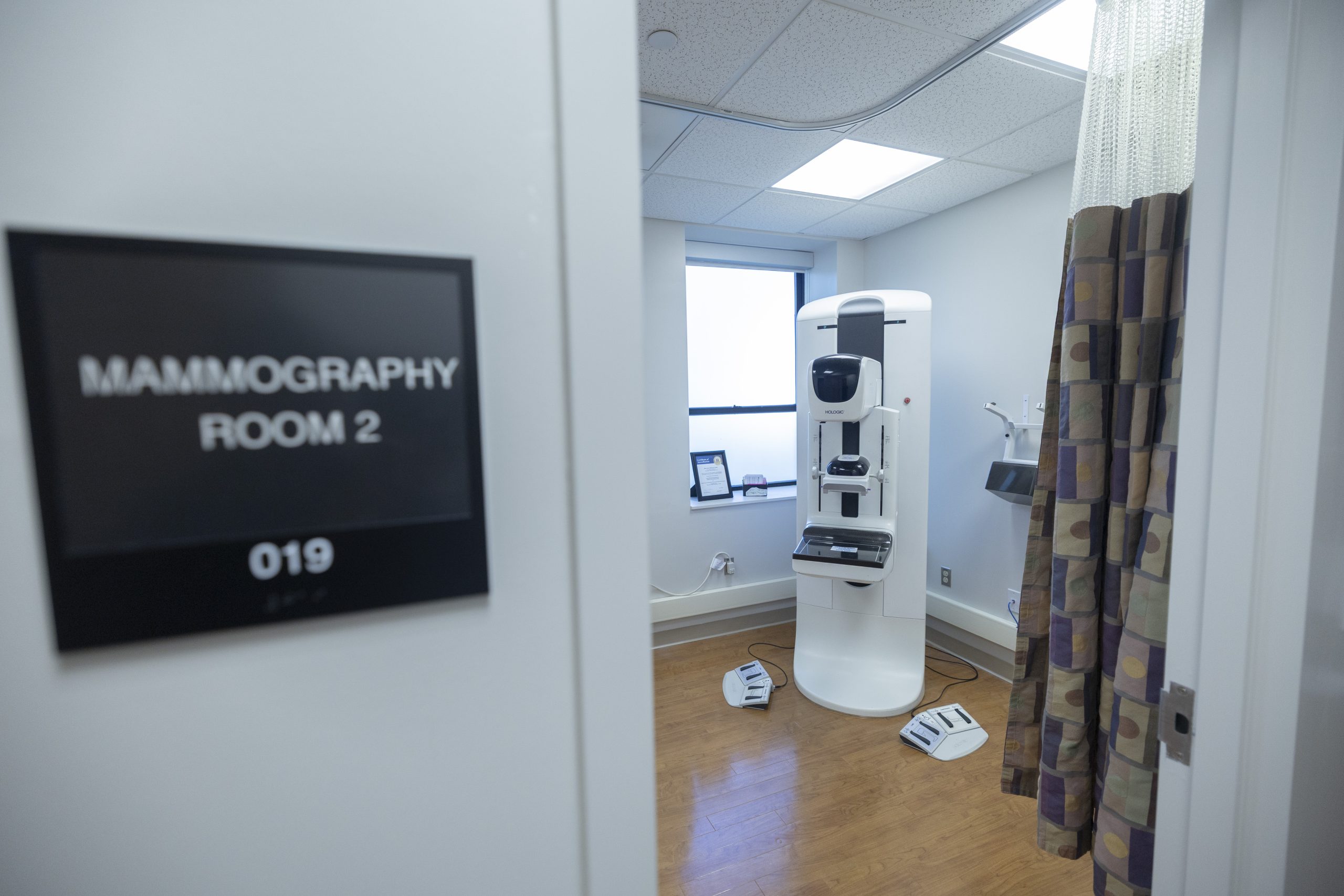
More than 316,000 women in the U.S. will be diagnosed with breast cancer this year and an estimated 42,000 women will lose their lives to the disease, according to the American Cancer Society. Experts say that number could be significantly reduced through consistent annual screenings, especially mammograms, which remain the most effective tool for early detection.
Despite widespread public health campaigns, many myths still surround mammograms, causing some women to skip them altogether. Dr. Neha Modi, Radiologist and Director of the Breast Imaging and Intervention Division at MetroWest Medical Center, notes that one of the most common concerns is radiation exposure. “The truth is, mammography uses a very low dose of radiation—about the same or less amount we naturally receive from the environment over the course of a year,” Dr. Modi explained. “Thanks to today’s advanced imaging technology, mammography is safer than ever before.”
Another common deterrent is discomfort during the procedure. While some compression is necessary to obtain a clear image, Dr. Modi emphasizes that the discomfort is brief and far outweighed by the potential benefits.
“Every breast is unique, and even small changes in breast parenchyma can cause images to look different from year to year,” said Dr. Modi. “That’s why annual screenings are so important, they allow us to track subtle changes that could signal a potential problem.”
While false positives are rare, they are a part of the screening process. A false positive may result in a follow-up appointment or additional imaging but does not mean that cancer is present.
“Sometimes, we call a patient back after a screening only to find everything is normal,” explained Dr. Modi. “This can be influenced by various factors, such as weight loss, hormone therapy, menopause, or even something as simple as positioning during the mammogram. When reviewing mammograms, we are primarily looking for changes from the previous year or anything that seems suspicious. Some apparent changes may actually be due to overlapping breast tissue during the exam, rather than a true change, which is why additional imaging may be needed.”
One dangerous myth, according to Dr. Modi, is the belief that young women are not at risk for breast cancer. She has seen cases in patients as young as 25.
“Just recently, we had a 30-year-old patient with a large lump who waited six months to have it checked. She assumed it was an abscess, but by the time she came in, it had already metastasized,” Dr. Modi recalled. “It’s heartbreaking.”
“Think of your annual breast imaging as an important checkpoint—not just for you, but for your family,” said Dr. Modi. “Early detection truly makes all the difference. If a problem is caught early, it can often be treated with minimal impact on your health. So, for both your own well-being and that of your loved ones, make breast imaging a priority and take care of yourself.”
To learn more about mammography and breast screenings, and to make your mammogram appointment with MetroWest Medical Center, please visit here.
 Christa McAuliffe Center
  MassBay Community College